Legend: The Hand-Drawn Font for Raw, Cinematic Impact
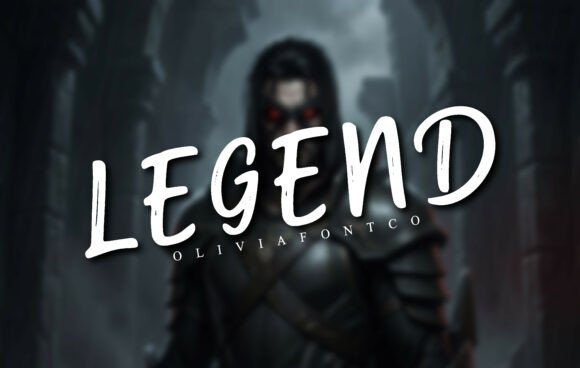
When you're designing for an audience that expects intensity—a gamer, a metal fan, an athlete—you need typography that doesn't just sit on the page but attacks it. This is where a specific kind of premium font earns its place in your toolkit. Legend isn't about subtle elegance; it's about injecting a jolt of raw, dark energy directly into your visual narrative. It's a hand-drawn brush typeface built for one primary purpose: to make a heroic, defiant statement that cannot be ignored, even over the most complex backgrounds.
Built for the Backdrop: Legibility Meets Aggression
The core challenge with dramatic, full-bleed imagery is that most typefaces get lost. They blur into smoky effects or clash with detailed illustrations. Legend solves this with a clever design feature: a crisp, outer drop contour. This isn't just a stylistic shadow; it's a functional outline that cuts the letterforms sharply from their surroundings. The result is absolute legibility over dark, chaotic, or illustrative backdrops. Whether it's a fiery explosion, a gritty street texture, or a smoky cinematic scene, Legend's characters remain bold, clear, and distinct. This makes it an extraordinary focal asset where other display fonts might fail.
The personality of the font is unmistakably aggressive and hand-crafted. It carries the imperfections and energy of a brush stroke, giving it an authentic, human touch that feels immediate and powerful. This isn't a clean, modern geometric sans; it's a typeface with character, designed to convey themes of strength, rebellion, and heroic struggle. Its style leans into dark fantasy and action aesthetics, making it a natural fit for projects that need to convey grit and intensity.
Where Legend Finds Its Arena
Understanding a font's ideal environment is key to using it effectively. Legend thrives in specific creative territories where its bold, cinematic voice is not just welcome but necessary.
- Gaming & Esports: This is Legend's home turf. Think title screens for dark fantasy or action RPGs, tournament overlays, team logos, and promotional banners. Its legibility over gameplay footage or animated backgrounds is a significant practical advantage.
- Music & Entertainment: The font is a perfect match for alternative metal album covers, concert posters, and band merchandise. It captures the raw energy of the genre and stands out in the visually crowded music scene.
- Apparel & Streetwear: For brands building a gritty, athletic, or tactical identity, Legend can anchor logo designs and graphic tees. It works exceptionally well in packaging design for products targeting a similar audience, like supplements or outdoor gear.
- Branding & Marketing: While not for every brand, it can powerfully define a niche identity. Use it for a heroic headline in an ad campaign, a bold title in editorial design for a fitness magazine, or a standout element in social media graphics for an action-oriented business.
It's a creative font for projects that demand attention and communicate a sense of action. For more subdued contexts like legal documents, long-form reading, or luxury branding, its intensity would likely be overwhelming.
Practical Application: Making Legend Work for You
Choosing a display font like Legend is just the first step. Using it effectively requires some strategic thinking about your project's goals and your audience's expectations.
Evaluating Project Fit and Audience
Before you even install the font, ask: Does my project's subject matter align with themes of power, defiance, or high-stakes action? Is my target audience likely to appreciate a bold, hand-drawn aesthetic? If you're designing for a children's book or a serene wellness brand, Legend is probably the wrong tool. But if you're creating a poster for a martial arts tournament, branding for a tactical flashlight company, or a logo for a streaming gamer, its strengths will shine. Always consider the emotional response you want to evoke.
Testing Font Pairings and Hierarchy
Legend is a star player, but it needs a supporting cast. Because it's so visually dominant, pairing it correctly is crucial. It typically works best as the headline or hero element. For body text or supporting information, you need a contrasting, highly readable companion. A clean, neutral sans serif font is often a safe bet—something with a modern, straightforward structure that doesn't compete for attention. In some cases, a simple, sturdy serif font could work for a more traditional but still powerful look. Avoid pairing it with other expressive script fonts or handwritten fonts, as this creates visual noise and undermines readability.
Leveraging Included Styles and Licensing
Quality premium fonts often come with more than just the basic letterforms. Check if Legend includes stylistic alternates, ligatures, or additional weights. These can provide valuable flexibility for fine-tuning your designs and ensuring uniqueness. Furthermore, for any commercial project—whether it's a client logo, a sold product, or a monetized YouTube channel—ensure you have the correct commercial font license. This protects you legally and supports the designers who create these vital design assets. A font is a key component of your brand identity, so investing in a proper license is part of building a professional, consistent presence.
Ultimately, Legend is a specialized tool for a specific job. It’s not about subtlety; it’s about impact. When your project calls for a typographic voice that’s raw, heroic, and impossible to look away from, this hand-drawn brush font delivers. Used thoughtfully, it can elevate your layout grid from merely informative to powerfully cinematic, forging a strong visual connection with an audience that values intensity and authenticity.